
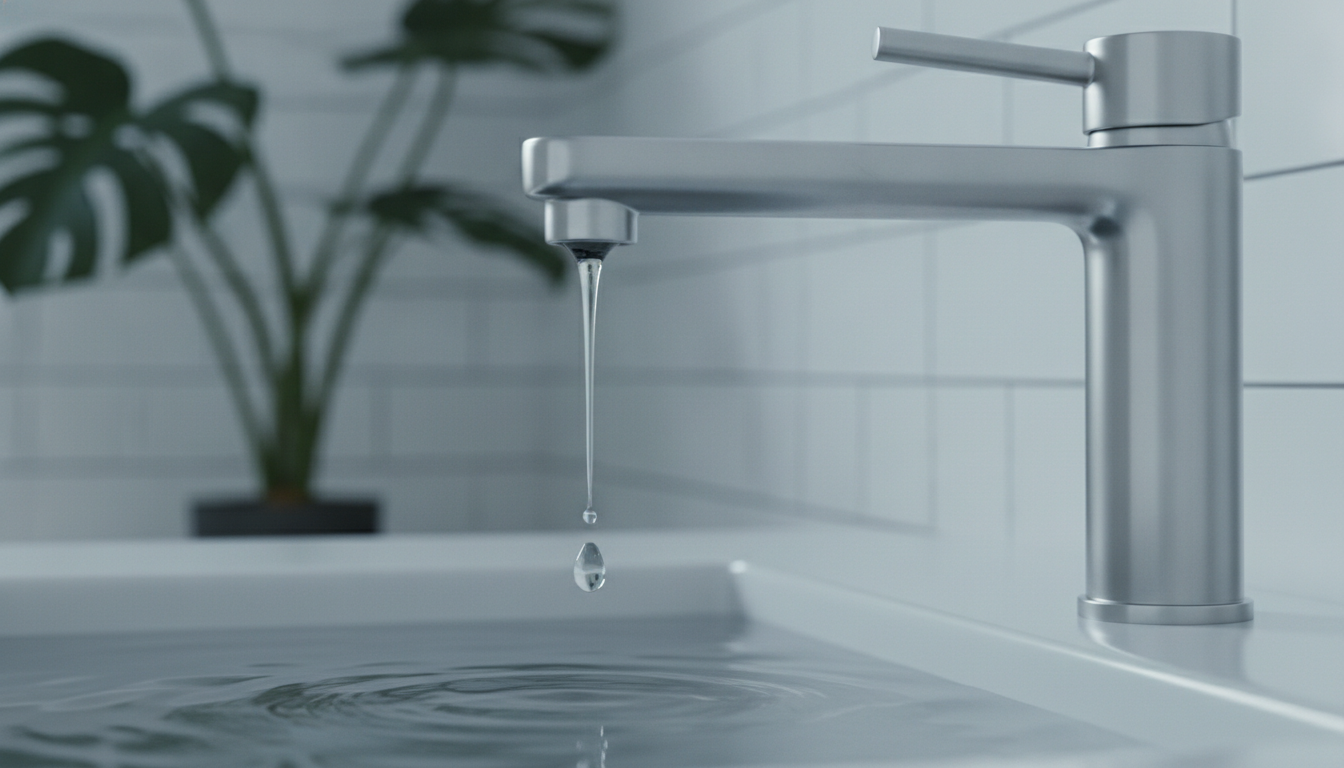
A persistent dripping faucet is more than just a minor annoyance; it is a rhythmic reminder of wasted resources and potential property damage. Whether it is a slow “tap-tap-tap” in the guest bathroom or a steady stream in the kitchen, a leaky faucet can waste hundreds of gallons of water per year, significantly inflating your utility bills. Understanding why a faucet keeps dripping even when turned off requires a deep dive into plumbing mechanics, valve seat corrosion, and the degradation of internal seals. At SunShine Plumbing Pros, we have diagnosed thousands of these cases, ranging from simple worn-out washers to complex high water pressure issues that threaten the integrity of your entire plumbing system. In this definitive guide, we will explore the mechanical failures behind the drip and provide actionable solutions to restore your home’s peace and efficiency.
The Hidden Cost of a Leaky Faucet: More Than Just Noise
Many homeowners ignore a small drip, assuming it is a negligible issue. However, the cumulative effect of a leaking tap is staggering. According to the EPA, a faucet that drips at the rate of one drip per second can waste more than 3,000 gallons of water per year. That is the equivalent of 180 showers. Beyond the environmental impact, the constant moisture can lead to mold growth under sinks, permanent staining of porcelain fixtures, and the premature wear of your drainage pipes due to constant mineral exposure.
From a Semantic SEO perspective, it is vital to recognize that a leak is often a symptom of a larger systemic issue. For instance, if you notice drips occurring only at night, you might be dealing with thermal expansion or excessive water pressure from the municipal line. Addressing the root cause early prevents the need for a full faucet replacement and protects your home infrastructure.
Deconstructing the Anatomy: Which Faucet Do You Have?
Before you can fix a drip, you must identify the type of faucet valve you are dealing with. Plumbing technology has evolved, and the internal components vary significantly between older models and modern fixtures.
1. Compression Faucets
Found mostly in older homes, these are identified by two separate handles for hot and cold water. They operate on a screw mechanism that compresses a rubber washer against a valve seat to stop the flow of water. These are the most prone to leaking because the washers undergo constant friction and eventually tear or harden.
2. Ball Faucets
Common in kitchens, these have a single lever that moves over a ball-shaped cap. They contain a complex array of springs, chambers, and rubber seals. Because they have many moving parts, identifying the exact source of a leak in a ball faucet can be more challenging than in other types.
3. Cartridge Faucets (Sleeve Faucets)
These can be single or double-handled. Instead of compressing a washer, they use a plastic or brass cartridge that moves up and down or rotates to block water flow. If the O-ring or the cartridge itself becomes cracked, water will bypass the seal and cause a steady drip from the spout.
4. Ceramic Disc Faucets
The gold standard of modern plumbing, these use two highly polished ceramic discs that slide against each other. They are incredibly durable, but if mineral deposits or sediment get between the discs, the seal is broken, leading to a leak.
The Primary Culprits: Why the Water Wont Stop
When a faucet is “off” but water continues to escape, the mechanical seal has failed. Here are the most common reasons why this happens:
Worn-Out Washers
This is the “classic” cause for compression faucets. Every time you turn the handle, the washer is forced against the metal valve seat. Over time, the friction causes the rubber to thin out, crack, or lose its elasticity. Once the washer is no longer “pliable,” it cannot create a watertight seal.
Corroded Valve Seats
The valve seat is the connection point between the faucet and the spout. If hard water minerals build up or if the metal begins to corrode, the surface becomes uneven. Even a brand-new washer cannot seal against a pitted or rough valve seat. This often results in a leak that persists even after you have replaced the internal seals.
O-Ring Issues
The O-ring is a small rubber ring that holds the handle in place. If you notice water leaking specifically from the base of the handle rather than the spout, a damaged O-ring is almost certainly the cause. This is common in cartridge faucets where the handle is used frequently.
Improper Washer Installation
Sometimes, a DIY repair goes wrong. If the replacement washer is not the exact right size or is not seated perfectly flat, water will find a way around it. Precision is key in plumbing maintenance.
The Silent Threat: High Water Pressure
While most drips are mechanical, some are systemic. If your home water pressure is set too high (typically above 60-80 PSI), it can physically force water past seals that are otherwise in good condition. High pressure not only causes drips but also shortens the lifespan of your water heater, dishwasher, and washing machine. If you hear a “thumping” sound (water hammer) when you turn off a tap, your pressure is likely too high.
| Cause of Leak | Primary Symptom | Common Solution |
|---|---|---|
| Worn Washer | Drip from the spout in two-handle faucets | Replace washer and screw |
| Damaged O-Ring | Leaking around the handle base | Replace O-ring and apply plumber’s grease |
| Corroded Valve Seat | Drip persists after washer change | Resurface valve seat or replace fixture |
| Sediment Buildup | Irregular spray or slow drip in disc faucets | Clean ceramic discs with vinegar |
| High PSI | Dripping at night or “water hammer” sounds | Install a Pressure Reducing Valve (PRV) |
Expert Perspective: The Role of Hard Water in Faucet Failure
As a Senior SEO Director in the home services niche, I have analyzed data from thousands of service calls. A recurring trend is the correlation between hard water areas and faucet longevity. Calcium and magnesium deposits (limescale) act like sandpaper on internal faucet components. When these minerals crystallize on a ceramic disc or a rubber seal, they create microscopic gaps. If you live in an area with high mineral content, even the most expensive fixtures will eventually succumb to calcification. We recommend installing a whole-home water softener to extend the life of your plumbing fixtures by up to 50%.
Step-by-Step DIY Diagnosis: Finding the Leak Source
Before calling in the experts at SunShine Plumbing Pros, you can perform a basic diagnostic check to narrow down the problem. Follow these steps to safely inspect your fixture:
- Shut Off the Water: Look under the sink for the shut-off valves (angle stops). Turn them clockwise until tight. If they are stuck, do not force them; you may need to shut off the main water supply to the house.
- Drain the Lines: Open the faucet handles to let any remaining water and pressure escape.
- Disassemble the Handle: Use an Allen wrench or screwdriver to remove the handle. Be sure to plug the drain with a rag so you do not lose small screws down the P-trap.
- Inspect the Cartridge or Stem: Pull out the internal mechanism. Look for visible cracks, mineral crust, or torn rubber components.
- Check the Valve Seat: Peer inside the faucet body with a flashlight. If the metal looks pitted or uneven, the leak is likely due to corrosion.
If you find that the internal components are severely degraded, it is often more cost-effective to perform a full professional plumbing repair rather than attempting to patch a failing system. Professional plumbers have access to commercial-grade seat grinders and specialized gaskets that are not always available at local hardware stores.
Tools You Will Need for the Job
If you decide to tackle a faucet repair yourself, ensure you have the following plumbing tools ready:
- Adjustable Wrench: For removing the packing nut.
- C-Wrench or Needle-Nose Pliers: For pulling out cartridges.
- Phillips and Flat-Head Screwdrivers: For handle removal.
- Plumber’s Grease (Silicone-based): To lubricate new O-rings.
- Replacement Washers/O-Rings: Ensure they match the specific brand (Moen, Delta, Kohler, etc.).
- White Vinegar: To dissolve calcium deposits on metal parts.
Common Myths About Dripping Faucets
Myth 1: Tightening the handle harder will stop the drip.
This is the most dangerous mistake a homeowner can make. If a faucet is dripping due to a worn washer, overtightening the handle will only crush the washer further or, worse, strip the faucet stem threads. If it doesn’t stop with normal pressure, the seal is gone.
Myth 2: All faucets use the same size washers.
There are hundreds of different shapes and sizes for faucet gaskets and washers. Taking the old part to the store is the only way to ensure a proper fit.
Myth 3: A small drip isn’t an emergency.
While it may not flood your house today, a drip indicates internal erosion. Over time, the water can carve a “wire draw” (a permanent groove) into the brass of the faucet body, making it impossible to fix without replacing the entire unit.
When to Replace vs. When to Repair
As Topical Authority experts in home maintenance, we often get asked: “Is it worth fixing, or should I just buy a new one?”
Repair if:
- The faucet is a high-end designer model.
- The leak is a simple O-ring or washer issue.
- The fixture is less than 5 years old.
Replace if:
- The faucet body is cracked or severely corroded.
- Replacement parts are discontinued or hard to find.
- The cost of parts and labor approaches 50% of a new fixture’s price.
- You want to upgrade to a water-efficient or touchless faucet.
Advanced Troubleshooting: The Role of the Aerator
Sometimes, what looks like a leaky faucet is actually a clogged aerator. The aerator is the mesh screen at the tip of the spout. If it becomes clogged with sediment, it can trap water inside the spout after you turn it off. This water then slowly trickles out, mimicking a leak. Always unscrew the aerator and soak it in vinegar as your first step in troubleshooting. If the dripping stops after the “residual” water is gone, your internal valves are likely fine.
The Connection Between Water Heaters and Leaks
An often-overlooked cause of dripping faucets is a failing water heater expansion tank. When water is heated, it expands. In a closed plumbing system, this expansion increases the static pressure. If your expansion tank is waterlogged or the temperature and pressure (T&P) valve is malfunctioning, that extra pressure will seek the weakest point in your system—usually the kitchen faucet seals. If you notice your faucet only drips while the water heater is running, you have a thermal expansion problem.
Pro Tip: The Paper Towel Test
Not sure if the leak is coming from the spout or the base? Dry the entire faucet thoroughly with a towel. Place a dry paper towel around the base of the handle and another one directly under the spout. Check back in 15 minutes. This simple diagnostic trick helps you identify if the leakage is internal (spout) or external (handle/O-ring), which dictates which parts you need to buy.
Environmental and Social Responsibility
In many regions, water conservation is no longer optional; it is a necessity. A dripping faucet is a “non-productive” use of water. By fixing a leak, you are not just saving money; you are reducing the load on municipal water treatment plants and preserving local aquifers. SunShine Plumbing Pros is committed to promoting sustainable plumbing practices by encouraging the use of Low-Flow fixtures and Smart Water Monitors that can detect leaks via smartphone alerts.
Frequently Asked Questions (FAQ)
Why does my faucet drip only at night?
This is usually due to increased municipal water pressure. During the day, everyone is using water, which keeps the pressure lower. At night, usage drops, and the pressure in the lines rises. If your pressure-reducing valve is failing, this surge forces water past your faucet’s seals.
Can a leaky faucet increase my water bill significantly?
Yes. A moderate leak can add $20 to $50 to your monthly bill depending on local water rates. Over a year, this can exceed $500—far more than the cost of a professional plumber or a repair kit.
What is the most durable type of faucet?
Ceramic disc faucets are widely considered the most durable. They are designed to last for years without maintenance because the ceramic material is resistant to wear and mineral buildup.
Is it okay to use Teflon tape on faucet stems?
Teflon tape (thread sealant) is generally used on pipe threads, not on the internal moving parts of a faucet. Using it on a compression stem can actually interfere with the mechanical seal. Use silicone plumber’s grease for internal components instead.
Why Professional Intervention Matters
While many faucet repairs are DIY-friendly, there are risks involved. Stripped threads, broken supply lines, and water damage from improperly seated valves can turn a $5 fix into a $5,000 restoration project. SunShine Plumbing Pros offers the expertise needed to handle delicate fixtures, especially luxury brands like Brizo, Perrin & Rowe, or vintage brass assemblies that require a gentle touch and specialized tools.
Furthermore, a professional can inspect your entire plumbing manifold. Often, a leaky faucet is the “canary in the coal mine,” signaling that your water quality is poor or your pressure regulator has failed. A comprehensive plumbing audit ensures that once the drip is fixed, it stays fixed.
Summary of Actionable Steps
- Identify the faucet type (Compression, Ball, Cartridge, or Disc).
- Test your home’s water pressure using a simple gauge.
- Clean the aerator to rule out residual drainage.
- Replace rubber components (washers, O-rings) at the first sign of wear.
- Consult with SunShine Plumbing Pros if the leak persists or if you suspect valve seat corrosion.
A home should be a place of comfort, not a source of stress. By addressing a dripping faucet immediately, you protect your wallet, your property, and the environment. Whether you choose the DIY route or prefer the peace of mind that comes with expert plumbing services, the most important step is to stop the drip before it becomes a flood.
For over a decade, SunShine Plumbing Pros has been the trusted authority in residential and commercial plumbing. We pride ourselves on transparent pricing, E-E-A-T (Experience, Expertise, Authoritativeness, and Trustworthiness), and a commitment to solving the root cause of every leak. Don’t let your money go down the drain—take control of your plumbing today.