
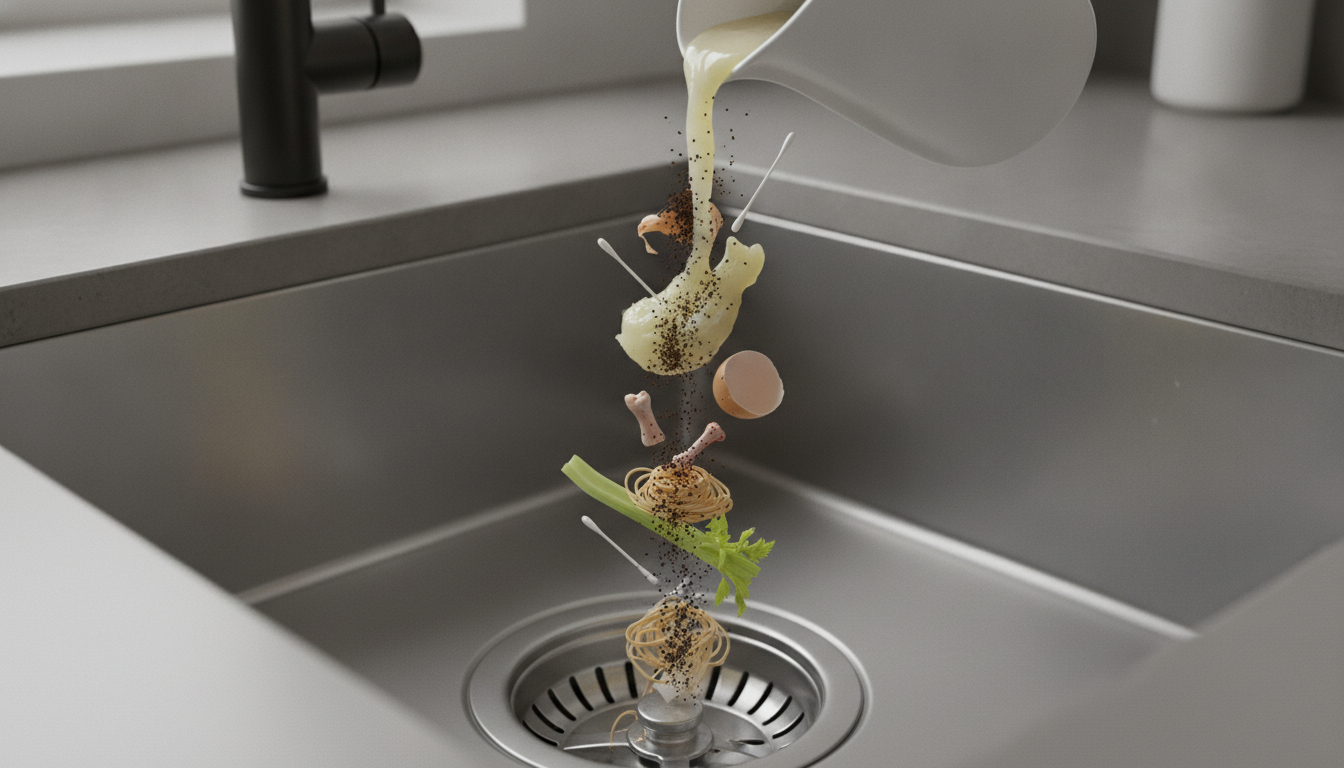
Most homeowners view the kitchen sink as a magic portal where unwanted organic matter disappears forever. However, as any master plumber will tell you, your drainage system is a complex network of P-traps, baffles, and gravity-fed lines that were never designed to be a secondary trash can. When you flush the wrong items down the drain, you aren’t just risking a minor clog; you are inviting biofilm buildup, pipe corrosion, and potentially catastrophic sewer line backups that can cost thousands of dollars to remediate. In this definitive guide, we will analyze the chemistry and physics of common household waste to understand why certain substances are lethal to your plumbing. Understanding the “why” behind drain maintenance is the first step toward avoiding emergency calls to SunShine Plumbing Pros for hydro-jetting or pipe replacement.
The Chemistry of “FOG”: Why Fats, Oils, and Grease Are Your Drain’s Greatest Enemy
The acronym FOG (Fats, Oils, and Grease) is a term used by municipal wastewater management teams to describe the primary cause of “fatbergs”—massive, concrete-like masses that block city sewers. In your home, the process is equally destructive. When liquid grease or oil is poured down the drain, it may seem harmless because it is in a liquid state. However, as soon as it hits the cooler temperatures of your underground pipes, it undergoes solidification.
Moreover, grease undergoes a chemical process called saponification. When fats react with the alkaline environment of the sewage system, they literally turn into a soap-like solid that is nearly impossible to flush out with water alone. These solids trap other debris—like hair or food particles—creating a dense blockage that narrows the diameter of your pipes over time. This reduces flow and eventually leads to a total stoppage. Always dispose of grease by pouring it into a heat-safe container and throwing it in the trash once it has cooled.
Common FOG Offenders Include:
- Meat drippings (bacon grease, hamburger fat, poultry skin)
- Cooking oils (canola, olive, vegetable, and coconut oil)
- Butter and margarine
- Mayonnaise and salad dressings
- Lard and shortening
Debunking Garbage Disposal Myths: The “Blades” Fallacy
One of the most persistent myths in home maintenance is that garbage disposals have “blades” that can chop anything into a liquid. In reality, disposals use impeller arms and a grind ring to pulverize food into small particles. This mechanism is highly susceptible to certain textures. If the particles are too sticky, too fibrous, or too dense, they will bypass the grinding process and lodge themselves in the P-trap or the horizontal waste line.
The Pasta and Rice Expansion Problem
Pasta, rice, and bread are “expandable” foods. Even if they are ground into small pieces by the disposal, they continue to absorb water as they sit in your pipes. A small handful of leftover spaghetti can swell to three times its size, creating a gelatinous plug that acts like a cork in your plumbing. Over time, these starchy residues create a thick paste that coats the interior of the pipes, catching other debris and causing slow drains.
Coffee Grounds: The “Sand” of the Plumbing World
Many people believe coffee grounds are beneficial for drains because they “scrub” the pipes or eliminate odors. This is dangerously incorrect. Coffee grounds do not dissolve in water. Instead, they settle in the low points of your plumbing—specifically the P-trap. Because they are dense and granular, they pack together like wet sand. Over months of disposal, these grounds create a sediment layer that can only be removed through mechanical snaking or professional cleaning.
Fibrous Vegetables and the “Hairball” Effect
Fibrous vegetables are the natural enemy of the garbage disposal motor. These items contain long, stringy filaments that do not break down easily. Instead of being pulverized, they wrap around the moving parts of the disposal or the impeller plate, leading to motor burnout. Even if they make it past the disposal, these fibers act like a net within the pipes, snagging other food particles and hair.
Never put these fibrous items down the drain:
- Celery: The “strings” are incredibly resilient.
- Corn husks and silks: These are notorious for jamming disposal units.
- Asparagus: Similar to celery, its tough fibers resist grinding.
- Onion skins: The thin, translucent membrane can pass through the disposal and act as a “lid” over the drain hole.
- Artichokes: The leaves are far too dense for residential disposal units.
The Hidden Danger of Eggshells and Bone Fragments
There is an old wives’ tale that eggshells sharpen the blades of a garbage disposal. As we’ve established, disposals don’t have blades, so there is nothing to sharpen. More importantly, the membrane on the inside of an eggshell is sticky and can wrap around the disposal’s components. The shell itself is ground into a fine, sand-like grit. Much like coffee grounds, this grit is heavy and settles in the pipes, contributing to chronic blockages.
Similarly, small bones (chicken, fish, or pork) should never enter the drain. While a high-end disposal might be able to crush them, the resulting bone shards are heavy and non-buoyant. They will not float through the sewer line; they will sink and create an obstruction that catches grease and hair.
| Item Category | Why It Is Dangerous | Best Disposal Method |
|---|---|---|
| Fats & Oils | Solidifies and causes saponification. | Seal in container; Trash. |
| Starchy Foods | Expands with water; creates paste. | Compost or Trash. |
| Coffee Grounds | Accumulates like heavy sand in P-traps. | Compost or Garden mulch. |
| Fibrous Veggies | Tangles in disposal impellers. | Compost or Trash. |
| Eggshells | Creates gritty sediment; membrane clogs. | Compost or Trash. |
| Medications | Contaminates water supply; toxic. | Pharmacy take-back programs. |
Chemical Warfare: Why Liquid Drain Cleaners Are a Trap
When a sink slows down, the first instinct for many is to reach for a bottle of caustic chemical drain cleaner. As experts at SunShine Plumbing Pros often observe, these chemicals can cause more damage than the clog itself. Most over-the-counter cleaners use sodium hydroxide or sulfuric acid to dissolve organic matter. These chemicals generate intense heat through an exothermic reaction.
If you have PVC pipes (common in modern homes), this heat can soften or deform the plastic, leading to leaks. If you have older metal pipes, the corrosive nature of the chemicals can eat through the pipe walls, especially if the cleaner sits in the pipe because it can’t get past the clog. Furthermore, these chemicals are highly toxic to the environment and can be dangerous for a plumber who has to snake the drain later, as the “splatter” can cause chemical burns to skin and eyes.
The “Flushable” Myth and Non-Food Items
While we are focusing on the kitchen drain, it is important to remember that the kitchen sink often shares a vent or a main line with the rest of the house. Non-food items are frequently dropped into the kitchen sink by accident or out of convenience. One of the biggest culprits is the produce sticker. Those tiny plastic stickers on apples and tomatoes do not dissolve. They are waterproof and adhesive, meaning they easily stick to the walls of your pipes and become the foundation for a future clog.
Other non-food items to keep out of the sink:
- Paper towels and napkins: Unlike toilet paper, these are designed to stay intact when wet. They will not break down.
- Paint: Latex and oil-based paints coat the pipes and contain chemicals that should not enter the wastewater stream.
- Cleaning Wipes: Even those labeled “biodegradable” take too long to break down for home plumbing systems.
- Microplastics: Avoid washing glitter or plastic-heavy craft supplies down the drain.
Professional Maintenance: How to Clean Your Drain Safely
Instead of reaching for chemicals, use mechanical or biological methods to maintain your kitchen plumbing. A zip-it tool or a simple plumbing snake can often clear hair and surface-level debris without damaging the pipes. For routine maintenance, consider using an enzymatic drain cleaner. Unlike caustic chemicals, enzymes use “good” bacteria to eat away at the biofilm and organic buildup inside the pipes without harming the plumbing material.
Pro Tip: The Boiling Water Flush
Once a week, pour a kettle of boiling water down your kitchen drain. This helps to liquefy any residual fats or soaps that have begun to coat the pipes, allowing them to be flushed out into the main sewer line before they have a chance to harden.
The Environmental Impact: Beyond Your Backyard
What you put down your drain doesn’t just affect your home; it affects the entire community. When medications are flushed, they pass through wastewater treatment plants and enter our rivers and oceans, affecting aquatic life. When grease causes a sewer overflow, raw sewage can back up into streets or even into other people’s homes. Being a responsible homeowner means recognizing that the kitchen sink is a gateway to a much larger, shared infrastructure.
The Role of the P-Trap
Every kitchen sink has a P-trap—the U-shaped pipe underneath the basin. Its primary job is to hold a small amount of water to prevent sewer gases from entering your home. However, because of its shape, it is also the first place where heavy items (like wedding rings, coffee grounds, or eggshells) settle. If you notice a foul smell coming from your sink, it is often because organic matter is rotting in the P-trap. Cleaning this manually is a simple DIY task that can prevent a larger blockage further down the line.
Warning Signs You Have a Developing Blockage
Clogs rarely happen overnight. Your plumbing will usually give you several warning signs before it fails completely. Recognizing these early can save you from a major SunShine Plumbing Pros emergency call-out.
- Slow Draining: If water pools in the sink and takes more than a few seconds to disappear, a clog is forming.
- Gurgling Noises: This indicates that air is being trapped in the lines, often due to a partial obstruction.
- Unpleasant Odors: The smell of rotting food suggests that debris is stuck in the P-trap or disposal.
- Backups in Other Sinks: If water comes up in the kitchen sink when the dishwasher runs, you likely have a clog in the main waste line.
Expert Perspective: The “Ice Cube” Trick
To keep your garbage disposal clean and the impellers moving freely, many professionals recommend grinding a handful of ice cubes along with some lemon peels. The ice provides a safe, abrasive force that knocks off biofilm and food residue, while the lemon peels provide a natural deodorizer. This is a far safer alternative to using harsh degreasers or chemical foams.
Frequently Asked Questions About Kitchen Drains
Can I put potato peels down the disposal?
Absolutely not. Potato peels are high in starch and very thin. They often slip past the grinding mechanism and then turn into a thick, glue-like paste in the pipes that can stop a drain almost instantly.
Is it okay to use “drain-safe” chemicals for hair clogs?
Even if a product claims to be “drain-safe,” it is usually a temporary fix that can damage older pipes. Mechanical removal (snaking) is always the preferred method for hair and solid obstructions.
Why does my sink smell like rotten eggs?
This is usually caused by hydrogen sulfide gas. It can happen if the P-trap has dried out (if the sink hasn’t been used in a while) or if there is significant bacterial growth on a clog within the trap. Running water or cleaning the trap usually solves the issue.
How often should I have my drains professionally cleaned?
For most homes, a professional inspection and cleaning every 2-3 years is sufficient. However, if you live in an older home with cast-iron pipes, annual maintenance may be necessary to prevent scale buildup.
Future-Proofing Your Home’s Plumbing Infrastructure
The best way to handle a plumbing emergency is to prevent it from ever happening. By treating your kitchen drain with respect and disposing of food waste in the compost or trash, you extend the life of your plumbing system and protect your home’s value. Remember, your pipes are designed for water and liquid waste—nothing more. When in doubt, “throw it out” (in the trash) rather than washing it away.
If you find yourself facing a stubborn clog that won’t budge, or if you’re concerned about the health of your home’s sewer lines, don’t hesitate to contact the experts. Professional diagnostics, such as sewer camera inspections, can pinpoint the exact location of a problem without tearing up your floors or yard. Maintaining a clear path for your wastewater is one of the most important, yet overlooked, aspects of homeownership. Keep your kitchen running smoothly by being mindful of what goes down the drain, and trust SunShine Plumbing Pros for all your advanced plumbing needs.