
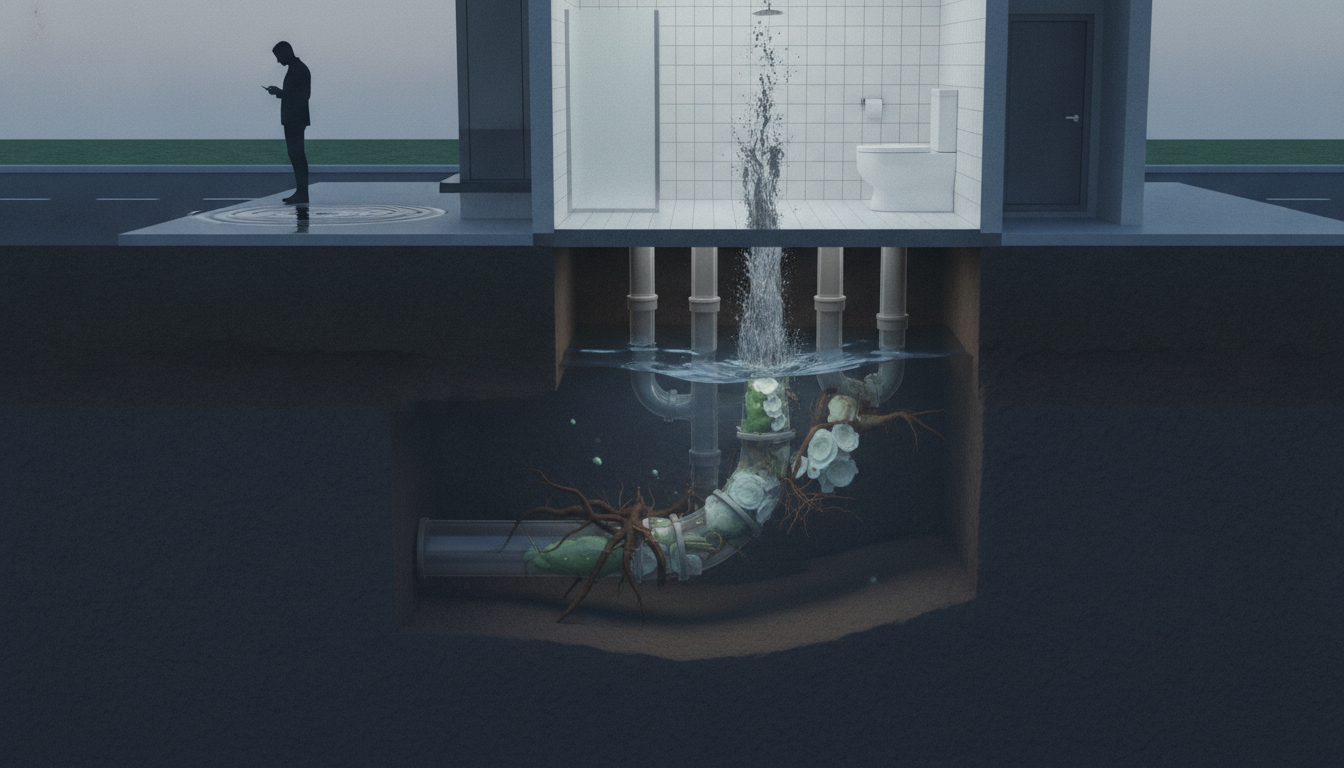
The nightmare of a sewer line backup often begins with a slow gurgle in the bathtub or a faint, metallic odor of waste emanating from the basement floor drain. For homeowners, understanding what causes sewer line backups is the first step in preventing a catastrophic and costly plumbing failure. A main sewer line blockage occurs when the pipe connecting your home to the municipal sewer system or septic tank becomes obstructed, forcing raw sewage to flow backward through your pipes. The primary culprits behind these backups include invasive tree roots, fat, oil, and grease (FOG) accumulation, structural pipe damage (such as cracks or collapses), flushing non-flushable items, and heavy rainfall overwhelming the local infrastructure. Identifying these risk factors early and consulting with a licensed professional like SunShine Plumbing Pros can save thousands of dollars in remediation and property restoration costs.
The Anatomy of a Main Line Failure: Why Waste Flows Backward
To understand why your plumbing is failing, you must first understand the physics of a gravity-fed sewer system. Most residential sewer lines are designed to move waste away from the home using a specific slope or “grade.” When an obstruction occurs in the lateral line (the pipe that connects your house to the street), the water has nowhere to go. Because modern plumbing is a closed loop, the rising pressure eventually finds the lowest point of entry—usually a basement drain, a shower stall, or a ground-floor toilet.
This is not merely a nuisance; it is a Category 3 blackwater event. Blackwater contains pathogenic bacteria, viruses, and parasites that pose significant health risks. When we analyze the root causes, we see a combination of environmental factors, human behavior, and the inevitable aging of subterranean infrastructure. By diagnosing the specific cause of a backup, homeowners can move from reactive repairs to proactive preventative maintenance.
1. The Silent Invaders: Tree Root Intrusion
Perhaps the most frequent cause of sewer line backups, particularly in established neighborhoods with mature landscaping, is tree root intrusion. Roots are biologically programmed to seek out moisture and nutrients. Your sewer pipe, which carries warm water and nutrient-rich waste, acts as a beacon for nearby trees.
Even the smallest hairline crack in a clay, cast iron, or Orangeburg pipe allows moisture to seep into the surrounding soil. Tree roots sense this moisture and grow toward the source. Once a tiny root fiber enters a joint or crack, it begins to expand. Over time, these roots create a dense “root ball” inside the pipe that acts as a natural filter, catching toilet paper, grease, and debris. Eventually, the pipe becomes completely choked, leading to a total sewer main obstruction.
Expert Perspective: Many homeowners believe that if they don’t have large trees in their own yard, they are safe. However, roots can travel significantly further than the “drip line” of a tree canopy. A neighbor’s silver maple or willow tree can easily compromise a sewer line fifty feet away.
2. The “Fatberg” Phenomenon: Grease and Cooking Oils
In the plumbing industry, we refer to the accumulation of Fat, Oil, and Grease as FOG. This is a leading cause of blockages in both residential laterals and municipal mains. When hot grease is poured down a kitchen sink, it is in liquid form. However, as it travels through the cold underground pipes, it undergoes a process called saponification, hardening into a wax-like substance that clings to the pipe walls.
As layers of grease build up, the interior diameter of the pipe narrows. This creates a “bottleneck” effect. What was once a four-inch pipe may effectively become a one-inch pipe, making it impossible for solid waste to pass through. These “fatbergs” can become as hard as concrete and often require hydro-jetting—a high-pressure water cleaning process—to remove.
Common FOG Culprits to Avoid:
- Meat drippings and bacon grease.
- Butter, margarine, and shortening.
- Dairy products and heavy creams.
- Cooking oils (canola, olive, vegetable).
- Mayonnaise and oily salad dressings.
3. Structural Degradation: Aging Pipe Materials
The material of your sewer line plays a massive role in its longevity and its susceptibility to backups. Depending on when your home was built, you may be dealing with materials that have reached the end of their functional lifespan.
| Pipe Material | Common Era | Typical Lifespan | Primary Failure Mode |
|---|---|---|---|
| Clay Tile | Pre-1950s | 50-60 Years | Cracking, joint separation, and root intrusion. |
| Cast Iron | 1950s-1970s | 75-100 Years | Internal corrosion (channeling) and scale buildup. |
| Orangeburg | 1940s-1960s | 30-50 Years | Flattening, ovaling, and total collapse (made of wood pulp/tar). |
| PVC/ABS | 1970s-Present | 100+ Years | Shifting soil, poor installation, or physical impact. |
As these pipes age, they can “belly” or sag. A sewer pipe belly occurs when a section of the pipe sinks due to soil erosion or poor compaction. This low spot collects standing water and sediment, eventually leading to a blockage even if no “clog” is present. If you suspect your older home has aging pipes, contacting SunShine Plumbing Pros for a video camera inspection is the most effective way to assess the structural integrity of your line.
4. The “Flushable” Myth: Non-Flushable Items
One of the most preventable causes of sewer backups is the disposal of inappropriate items down toilets. Despite marketing claims, many products labeled as “flushable” do not break down in the sewer system the way toilet paper does. Toilet paper is designed to disintegrate within seconds of immersion; flushable wipes, however, are often made of synthetic fibers that remain intact for days or weeks.
When these wipes enter the sewer line, they snag on imperfections in the pipe, such as rough cast iron scale or small tree roots. They then act as a net, catching other debris and creating a massive, impenetrable plug. Other common offenders include feminine hygiene products, paper towels, and dental floss. Dental floss is particularly dangerous as it can wrap around other debris, “binding” a clog together like twine.
Pro Tip: If it isn’t human waste or toilet paper, it doesn’t belong in the sewer. Even “compostable” materials should be kept out of the plumbing system to ensure long-term flow.
5. Municipal Sewer Surcharges and Heavy Rainfall
Sometimes, a backup has nothing to do with your home’s internal plumbing and everything to do with the city’s infrastructure. During extreme weather events or heavy rainstorms, the municipal sewer system can become overwhelmed by the sheer volume of water. This is especially common in cities with combined sewer systems, where storm runoff and sanitary waste travel through the same pipes.
When the city main reaches capacity, the excess water follows the path of least resistance—which may be the lateral line leading back into your basement. To prevent this, many homeowners install a backwater valve (also known as a backflow preventer). This device allows waste to exit the home but features a flap that closes automatically if water begins to push back from the city side.
6. Improper Pipe Installation and Soil Shifting
In newer homes, backups are often caused by poor workmanship or geological factors. If a sewer line was not installed with the correct “fall” (usually 1/4 inch of drop per foot of pipe), waste will move too slowly, allowing solids to settle and accumulate. This is known as “insufficient grade.”
Furthermore, soil shifting or settling can wreak havoc on a sewer line. In areas with expansive clay soil, the earth expands and contracts with moisture levels. This movement can cause pipes to disconnect at the joints or snap entirely. In some cases, a “sinkhole” effect caused by a leaking water main can wash away the soil supporting a sewer line, leading to a catastrophic collapse.
Recognizing the Warning Signs of an Impending Backup
Rarely does a sewer line fail without warning. Most homeowners overlook the early symptoms, attributing them to localized clogs. Being vigilant can help you intervene before raw sewage enters your living space. Watch for these red flags:
- Multiple Clogged Fixtures: If your kitchen sink, toilet, and shower are all draining slowly at the same time, the problem is likely in the main line.
- Bubbling and Gurgling: If your toilet bubbles when you run the bathroom sink, or if the shower drain gurgles when the washing machine discharges, air is being trapped in the system by a blockage.
- Unexplained Odors: The smell of raw sewage or “rotten eggs” near drains is a sign that sewer gases are being pushed back into the home.
- Lush Green Patches in the Yard: If one area of your lawn is significantly greener and faster-growing than the rest, it may be receiving “fertilizer” from a leaking underground sewer pipe.
- Indentations in the Lawn: A sunken area in your yard often indicates that a sewer pipe has collapsed and the surrounding soil is being washed away into the line.
The Role of Hydro-Jetting vs. Snaking in Clearing Backups
When a backup occurs, the method of clearing it depends entirely on the cause. A standard plumbing snake (or auger) is effective for punching a hole through a clog to restore temporary flow. However, it often leaves behind grease and small roots that will quickly regrow or re-clog.
Hydro-jetting is the gold standard for sewer line maintenance. This process uses specialized nozzles to blast water at pressures up to 4,000 PSI into the pipe. It doesn’t just clear the blockage; it scours the interior walls of the pipe, removing grease buildup, scale, and tree roots completely. For homeowners dealing with recurring FOG issues, hydro-jetting is the most cost-effective long-term solution.
Preventative Strategies: Protecting Your Home from Sewage Damage
Prevention is significantly cheaper than restoration. A single sewer backup can cost upwards of $10,000 in flooring replacement, drywall repair, and professional biohazard cleaning. Here is how to protect your investment:
- Annual Video Inspections: Have a professional run a fiber-optic camera through your line once a year to spot cracks or root growth before they cause a backup.
- Install a Backwater Valve: If you live in a low-lying area or a city with frequent flooding, this is your best defense against municipal surcharges.
- Practice Proper Waste Disposal: Educate all household members on the “Three Ps” (Pee, Poop, and Paper). Everything else goes in the trash.
- Root Barrier Installation: If you have high-value trees near your sewer line, consider installing physical or chemical root barriers to redirect growth away from the pipes.
- Replace Aging Lines: If your home has Orangeburg or failing clay pipes, consider trenchless sewer repair. This modern method allows for pipe relining (CIPP) or pipe bursting without digging up your entire yard.
The Impact of Illegal Connections
In many older municipalities, homeowners have illegally connected their sump pumps or roof downspouts directly into the sanitary sewer line. While this may seem convenient for moving water away from the foundation, it is a major contributor to sewer backups. During a storm, a single sump pump can discharge thousands of gallons of water into the sewer system, quickly exceeding the capacity of the pipes and causing backups for both the homeowner and their neighbors. Most local codes now require these “clear water” sources to be discharged onto the lawn or into a dedicated storm sewer.
Health and Safety: What to Do If a Backup Occurs
If you experience a backup, your first priority is safety. Do not flush toilets or run any water, as this will only add to the volume of the backup. Turn off the electricity to the affected area if there is standing water to prevent electrocution. Avoid skin contact with the sewage, and keep children and pets away from the site.
Call a professional service like SunShine Plumbing Pros immediately. They have the specialized equipment—including high-capacity pumps, industrial dehumidifiers, and antimicrobial treatments—to safely manage the situation. Remember, standard homeowners insurance often requires a specific “Sewer Backup Rider” to cover these damages; check your policy to ensure you are protected.
Summary of Common Sewer Obstructions
Understanding the “why” behind sewer failures allows for better home management. Whether it’s the biological persistence of tree roots or the chemical hardening of kitchen grease, most backups are the result of long-term processes rather than sudden accidents. By combining behavioral changes with professional inspections, you can ensure your home’s waste management system remains functional for decades.
For expert diagnosis, emergency clearing, or long-term sewer line replacement, trust the specialists who understand the complexities of modern and legacy plumbing. SunShine Plumbing Pros provides the technical expertise and advanced diagnostic tools necessary to keep your main line flowing freely, protecting your home and your family’s health from the dangers of sewer failure.
Frequently Asked Questions About Sewer Line Backups
How can I tell if the backup is in my house or the city’s main?
Check with your neighbors. If they are also experiencing backups, the problem is likely the municipal main. If the backup is isolated to your home, the blockage is in your individual lateral line. Additionally, if you see water bubbling out of the cleanout pipe in your yard, the blockage is definitely in your line.
Does homeowner’s insurance cover sewer backups?
Standard policies typically do not cover sewer backups unless you have added a specific endorsement or rider for “Sewer and Drain Backup.” It is highly recommended to add this coverage, as the cost of cleanup and mold remediation can be astronomical.
Can I use chemicals to clear a sewer line backup?
We strongly advise against using caustic chemical drain cleaners for main line blockages. These chemicals are rarely effective against large-scale obstructions like tree roots or grease, and they can generate intense heat that damages PVC pipes or accelerates the corrosion of cast iron. Furthermore, they pose a significant safety risk to the plumber who eventually has to clear the line manually.
How often should I have my sewer line cleaned?
For most homes, a professional cleaning every 18 to 24 months is sufficient. However, if you have frequent issues with tree roots or live in a home with older clay pipes, an annual hydro-jetting service is a wise investment to prevent emergency service calls.
What is trenchless sewer repair?
Trenchless repair is a method of fixing or replacing underground pipes without digging a massive trench through your yard. Methods like Pipe Lining involve inserting an epoxy-saturated sleeve into the old pipe and inflating it, creating a new “pipe within a pipe.” This is often faster, less destructive, and comes with a 50+ year lifespan.
Managing your home’s sewer system doesn’t have to be a mystery. By understanding the causes—from invasive roots to structural failures—you can take control of your plumbing health. When in doubt, always rely on the professional grade equipment and experience of SunShine Plumbing Pros to keep your home safe, dry, and functional.