
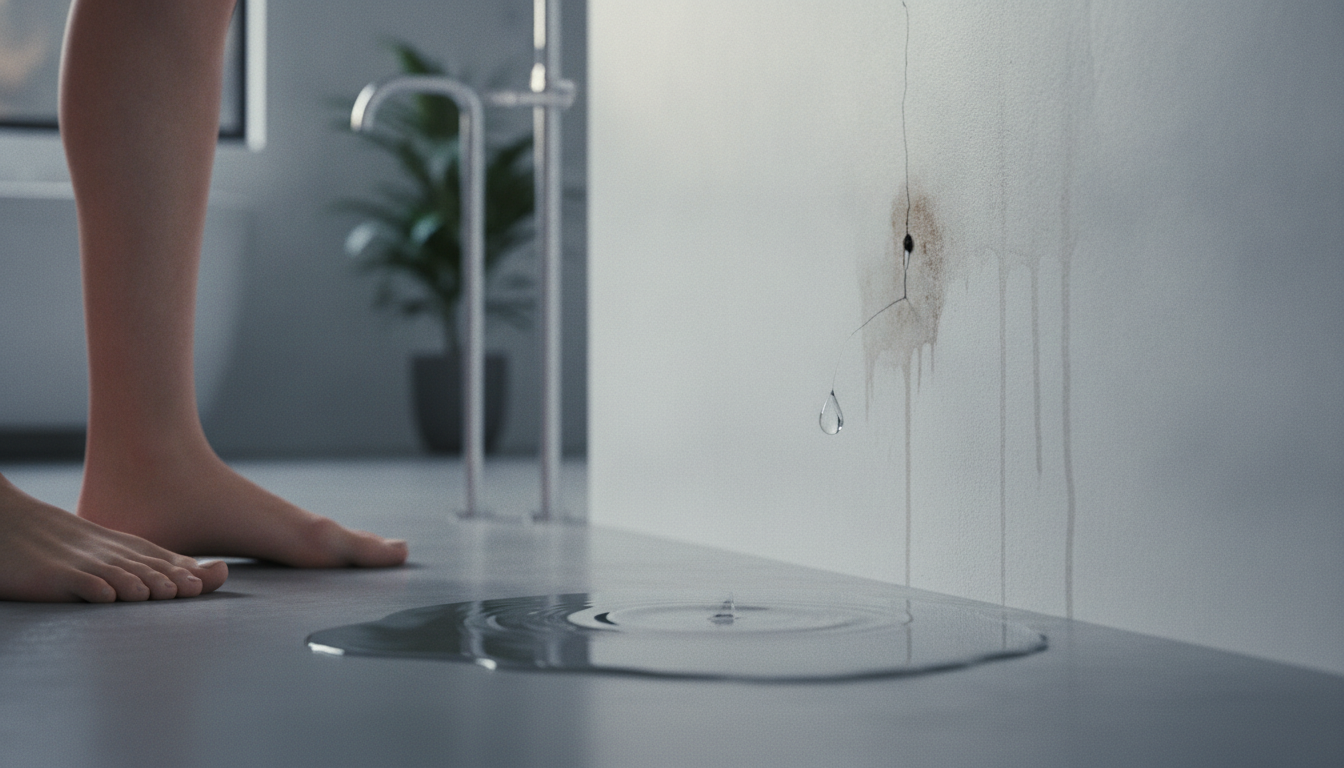
Identifying a hidden plumbing leak before it escalates into a catastrophic structural failure is one of the most critical skills a homeowner can possess. While a burst pipe is obvious, the subtle, slow-dripping “silent killers” behind your drywall or under your concrete slab cause the most long-term damage, leading to mold proliferation, wood rot, and compromised foundation integrity. To detect these threats, look for unexplained spikes in your water utility bill, persistent musty odors, damp spots on flooring, or the sound of running water when all faucets are closed. Professional leak detection services utilize acoustic sensors and thermal imaging to pinpoint these issues without invasive demolition.
The Anatomy of a Silent Leak: Why Early Detection Is Non-Negotiable
Most homeowners view plumbing as a binary system: it either works or it breaks. However, the reality is far more complex. Modern residential plumbing systems are networks of pressurized pipes hidden within the “envelope” of the home. When a pinhole leak develops in a copper pipe due to electrolysis or pitting corrosion, it may only release a few drops per minute. Over months, those drops accumulate into gallons of trapped moisture, creating a micro-environment ripe for Stachybotrys chartarum (black mold).
Understanding the warning signs is not just about saving money on your water bill; it is about preserving your home’s market value and your family’s respiratory health. According to the Environmental Protection Agency (EPA), the average household’s leaks can account for nearly 10,000 gallons of water wasted every year. Ten percent of homes have leaks that waste 90 gallons or more per day. By the time you see a puddle, the damage may already be in the thousands of dollars. This is why SunShine Plumbing Pros emphasizes a proactive approach to residential maintenance.
The Psychological Barrier to Leak Detection
Many people ignore the early warning signs because of “homeowner denial.” A small patch of bubbling paint in the hallway is dismissed as a bad paint job. A faint whiff of mildew in the basement is attributed to “old house smell.” Breaking through this denial is the first step in effective home management. If something looks, smells, or sounds different than it did six months ago, there is a high probability of a mechanical failure within your plumbing system.
Visual Red Flags: What Your Walls and Floors Are Trying to Tell You
Your home’s surfaces act as a canvas that reflects the health of the internal systems. Because water follows the path of least resistance, the location of a visual sign does not always indicate the exact location of the leak, but it confirms a breach in the system.
1. Unexplained Discoloration and Staining
Water stains on ceilings or walls often appear as brownish, yellowish, or “tea-colored” rings. These are caused by minerals in the water and dust within the wall cavity being pulled to the surface as the moisture evaporates. If you notice a stain that is expanding, even slowly, you have an active leak. If the stain is dry but remains, you may have an intermittent leak caused by a failing shower pan or a loose wax ring under a toilet.
2. Bubbling, Peeling, or Blistering Paint
Modern latex paint is remarkably resilient and can actually act as a waterproof membrane for a short period. When water leaks behind a painted wall, it can trap the moisture between the drywall and the paint layer, causing the paint to stretch and bubble. If you press on a paint bubble and it feels soft or releases water, you are dealing with a significant behind-the-wall leak.
3. Warped or Buckling Flooring
Whether you have hardwood, laminate, or luxury vinyl plank (LVP), moisture is the enemy of flooring.
- Hardwood: Look for “cupping,” where the edges of the planks are higher than the center.
- Laminate: Watch for swelling at the seams, which indicates water is being absorbed into the fiberboard core.
- Tile: Loose or cracking grout lines can indicate that the subfloor is saturated and shifting.
4. Efflorescence on Basement Walls
If you have a basement or a crawlspace, look for a white, powdery substance on the concrete or brick. This is efflorescence—salt deposits left behind when water evaporates. While this can be caused by external groundwater, it is often a sign of a leaking main line or a sewer lateral that is saturating the soil outside your foundation.
The Auditory Clues: Listening for the “Ghost” in the Pipes
In a quiet house, your plumbing system should be silent unless an appliance is running. If you start hearing things that go “bump” or “hiss” in the night, it is time to investigate.
The Hissing Sound of High-Pressure Leaks
A small hole in a pressurized copper or PEX pipe often produces a distinct hissing or whistling sound. This occurs because the water is being forced through a tiny aperture at 40 to 60 PSI (pounds per square inch). This sound is most audible near toilets or under sinks but can sometimes be heard through the drywall in quiet bedrooms.
Ticking or Dripping Behind Walls
While a dripping faucet in the sink is an easy fix, a dripping sound inside a wall is a structural emergency. This often indicates a leak in a drain-waste-vent (DWV) pipe. Because these pipes are not always under pressure, the sound may only occur when a shower is running or a toilet is flushed upstairs.
The Sound of Rushing Water
If you hear the sound of water rushing through your pipes when no one is using a faucet, dishwasher, or washing machine, you likely have a slab leak or a major break in your main water line. This is a critical situation that requires immediate professional intervention from a team like SunShine Plumbing Pros to prevent foundation erosion.
Olfactory Indicators: The “Nose” Knows
Our sense of smell is highly sensitive to the biological changes caused by excess moisture. If your home has a “signature scent” that smells like a damp forest or a locker room, you are likely smelling the metabolic byproducts of mold and bacteria.
Musty and Earthy Odors
Mold and mildew thrive in dark, damp environments. A hidden leak provides the perfect incubator. If you notice a musty smell that persists even after deep cleaning, the source is likely hidden. Pay close attention to the areas under kitchen sinks and behind vanities, where P-traps and supply lines are located.
The Smell of Sewer Gas
Every plumbing fixture has a “trap” designed to hold a small amount of water, which blocks sewer gases from entering the home. If you smell rotten eggs or “sewage,” it could mean:
- A dry trap in an unused guest bathroom.
- A cracked vent pipe inside the wall.
- A broken sewer line under the house.
The Water Meter Test: A DIY Diagnostic Power Move
If you suspect a leak but cannot see or hear it, your water meter is the ultimate truth-teller. This device tracks every drop of water that enters your property.
How to Conduct a Meter Audit
- Shut Off All Water: Ensure no faucets are running, the ice maker is off, and the washing machine is not in a cycle.
- Locate the Meter: Usually found in a concrete box near the street or in the basement.
- Check the Leak Indicator: Most modern meters have a small triangular dial or a digital display that shows even minute flow. If this is spinning, you have a leak.
- The Two-Hour Test: Record the exact meter reading. Do not use any water for two hours. Re-check the reading. If the number has changed, you have a hidden leak.
| Leak Size | Gallons Lost Per Day | Annual Cost Impact (Est.) |
|---|---|---|
| Pinhole (1/32″) | 260 Gallons | $400 – $600 |
| Standard Drip | 20 Gallons | $50 – $100 |
| Running Toilet | 200+ Gallons | $300 – $800 |
| Slab Leak | 500+ Gallons | $1,000+ |
Expert Perspective: The Danger of Slab Leaks
As a seasoned professional, I can tell you that slab leaks are the most insidious form of hidden plumbing failure. These occur when the copper piping installed beneath your home’s concrete foundation develops a leak. Because the water is trapped under the concrete, you won’t see a puddle for a long time. Instead, the water will saturate the soil, causing it to expand or wash away.
Signs of a Slab Leak:
- Hot Spots on the Floor: If a hot water line leaks, the heat will transfer through the concrete and your flooring. If you feel a warm patch on your tile or carpet, call a plumber immediately.
- Foundation Cracks: Shifts in the soil caused by water saturation can lead to structural cracks in your walls and flooring.
- Low Water Pressure: A significant breach under the slab will drop the pressure for the entire house.
Pro Tip: If you suspect a slab leak, do not let a contractor “guess” by Jackhammering your floor. Ensure they use electronic leak detection equipment to find the precise coordinates of the leak first.
Advanced Detection Technology: How Pros Find the Invisible
When you call SunShine Plumbing Pros, we don’t rely on guesswork. We use a suite of high-tech tools designed to find leaks with surgical precision. This minimizes the damage to your home and reduces repair costs.
Acoustic Leak Detection
We use highly sensitive microphones and amplifiers to listen for the specific frequency of escaping water. By moving these sensors across your floors and walls, we can hear the “whoosh” of a leak even through several feet of concrete or earth.
Thermal Imaging (Infrared)
Infrared cameras detect temperature differences on surfaces. Since water changes the thermal mass of drywall and flooring, a leak will show up as a “cool” or “hot” spot on our screen, allowing us to see through the walls without a single hole being drilled.
Tracer Gas Detection
In some cases, we drain the water from your pipes and inject a safe, inert gas mixture (usually nitrogen and hydrogen). We then use a “sniffer” probe to detect where the gas is escaping. This is incredibly effective for finding tiny leaks in long outdoor supply lines.
The Financial and Health Consequences of Procrastination
A hidden leak is a liability that grows exponentially. Beyond the water bill, you must consider the secondary damage.
“Water damage is the second most common insurance claim in the United States. However, many policies have ‘slow leak exclusions,’ meaning if you let a leak go for weeks without repair, the insurance company may deny the claim for mold or structural rot.”
The Mold Factor
Mold can begin growing within 24 to 48 hours of water exposure. Once it enters your HVAC system, it spreads spores throughout the house, leading to allergic reactions, asthma exacerbation, and chronic respiratory issues. Detecting a leak early is the only way to prevent a five-figure mold remediation bill.
Preventative Measures: Hardening Your Home Against Leaks
While some leaks are inevitable due to the age of the materials, many can be prevented with simple maintenance.
- Install a Smart Water Monitor: Devices like the Flo by Moen or Phyn monitor your water pressure and flow 24/7. They can automatically shut off your main valve if they detect a leak.
- Check Your Water Pressure: High water pressure (over 80 PSI) stresses your pipes and joints. Install a Pressure Reducing Valve (PRV) to keep your home at a safe 50-60 PSI.
- Replace Old Supply Lines: If your toilets and sinks still use rigid plastic or old chrome lines, replace them with braided stainless steel hoses.
- Softener Maintenance: Hard water leads to scale buildup, which can cause internal corrosion in copper pipes. Ensure your water softener is functioning correctly.
Frequently Asked Questions About Hidden Leaks
How do I know if a leak is from my pipes or my roof?
Check the timing. If the spot only appears or grows during a rainstorm, it is likely a roofing or flashing issue. If the spot is consistent or grows regardless of the weather, it is almost certainly a plumbing leak. Also, plumbing leaks often occur near “wet walls” (walls containing pipes for kitchens or baths).
Can a hidden leak cause my house to settle?
Yes. Significant leaks, especially slab leaks or main line leaks, can wash away the “fines” in the soil (the small particles that provide stability). This creates voids under your foundation, leading to “differential settlement,” which causes doors to stick and large cracks to appear in drywall.
Is a small pinhole leak really that big of a deal?
Absolutely. A pinhole leak is often a symptom of generalized corrosion. If one hole has appeared, the rest of the pipe is likely thin and brittle. Patching a pinhole is a temporary fix; often, the section of pipe needs to be replaced.
Why Choose SunShine Plumbing Pros for Leak Detection?
When dealing with hidden leaks, experience matters. SunShine Plumbing Pros has spent years refining the art of non-invasive detection. We understand the local building codes, the common piping materials used in our area, and the unique environmental factors that contribute to pipe failure. Our technicians are trained not just to find the leak, but to explain the “why” behind it, helping you make informed decisions about your home’s infrastructure.
We pride ourselves on transparency. When we arrive at your home, we provide a comprehensive assessment, utilizing the latest technology to ensure we are treating the cause, not just the symptom. Whether it’s a simple faucet drip or a complex slab leak, our goal is to restore your peace of mind and protect your most valuable investment.
Final Checklist: Is Your Home Leaking?
If you check more than two boxes on this list, it is time to call a professional:
- [ ] My water bill has increased by 15% or more with no change in usage.
- [ ] I can hear water running when everything is turned off.
- [ ] There is a musty smell in the cabinets under my sinks.
- [ ] I have noticed new cracks in my tile or grout.
- [ ] My water meter’s leak indicator is moving.
- [ ] There are damp spots or discoloration on my ceilings or walls.
- [ ] My water pressure has suddenly dropped.
Don’t wait for the ceiling to fall or the floor to buckle. A hidden leak is a problem that only gets more expensive with time. By staying vigilant and recognizing these warning signs, you can catch the “silent killer” before it catches you off guard. Contact SunShine Plumbing Pros today for a professional leak audit and keep your home dry, safe, and efficient.