
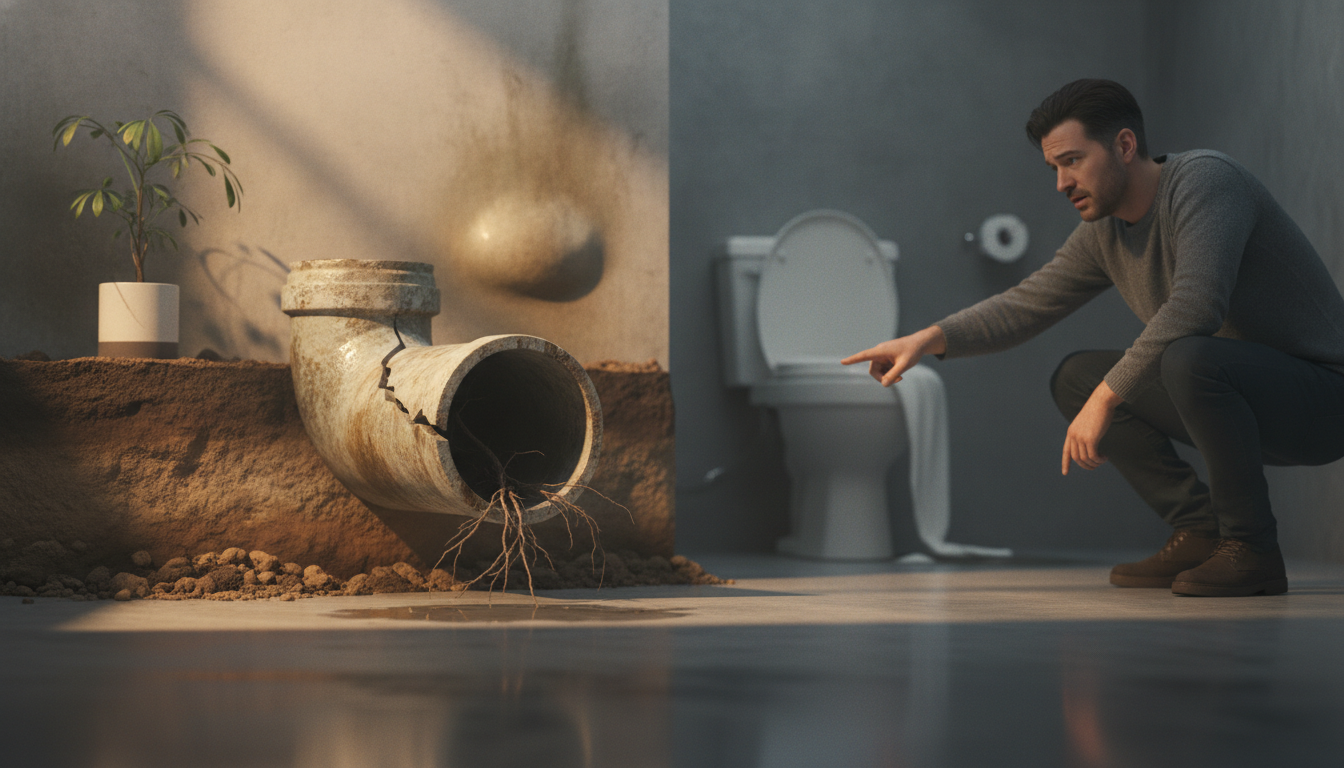
Recognizing the signs of a failing sewer line is critical for homeowners looking to avoid catastrophic property damage and exorbitant repair costs. From persistent slow drains and sewage backups to unexplained lush patches of grass in the yard or a pervasive rotten egg smell, these red flags indicate that your home’s wastewater system is compromised. Understanding the nuances of main sewer line clogs, tree root intrusion, and pipe corrosion allows for proactive maintenance. If you notice multiple symptoms like gurgling toilets or foundation cracks, it is time to consult an expert like SunShine Plumbing Pros to perform a professional sewer camera inspection and evaluate your trenchless sewer repair options.
The Silent Crisis Beneath Your Foundation: Understanding Sewer Failure
Most homeowners operate on an “out of sight, out of mind” basis when it comes to their plumbing. However, the main sewer lateral—the pipe that carries all waste from your home to the municipal sewer main or septic tank—is the most hardworking and vulnerable component of your infrastructure. When this line fails, the consequences are not merely inconvenient; they are hazardous to your health and your home’s structural integrity.
A failing sewer line typically does not happen overnight. It is often a slow degradation caused by calcification, ground shifting, or the relentless growth of tree roots seeking moisture. As a Senior SEO Director in the plumbing niche, I have observed that the most expensive repairs are almost always the result of ignored early warning signs. By the time raw sewage is flooding your basement, the damage has already permeated your subflooring and drywall.
1. Persistent Slow Drains Across Multiple Fixtures
A single clogged sink is usually a localized issue, likely a hairball or grease buildup in the P-trap. However, when multiple drains—such as the kitchen sink, the bathtub, and the laundry line—all begin to drain slowly simultaneously, you are likely looking at a mainline blockage.
In a healthy system, gravity and pressure work in tandem to move waste efficiently. When a sewer pipe is cracked or collapsed, the flow is restricted. You might notice that while you are running the washing machine, the water levels in your toilets fluctuate, or the shower starts to pool. This is a classic symptom of a sewer line backup. If you find yourself reaching for a plunger every other day, the problem is deeper than a simple clog.
The “Gurgle” Factor
Have you ever heard a strange bubbling or gurgling sound coming from the toilet when you run the bathroom sink? This occurs because air is trapped in the system. As water tries to push past a sewer line obstruction, air bubbles are forced back up through the water seals in your traps. This “gurgling” is a cry for help from your plumbing system.
2. The Unmistakable Odor of Sewer Gas
A functional sewer system should be airtight, with the exception of the vent stacks on your roof. If you smell sewer gas (hydrogen sulfide) inside or immediately around your home, it is a definitive sign of a leak or a crack in the line.
Hydrogen sulfide is not just unpleasant; it is toxic in high concentrations and highly flammable. This odor often permeates through the floor drains or through cracks in the foundation where the sewer line has ruptured. If your home smells like a “rotten egg” or a stagnant swamp, do not mask it with air fresheners. This is a primary indicator that the sanitary sewer is no longer contained.
3. Lush, Green Patches in the Yard
While every homeowner wants a beautiful lawn, a specific area that is significantly greener and more vibrant than the rest of the yard is a major red flag. Sewage acts as a potent fertilizer for grass and vegetation. If you notice a “growth spurt” in a linear path across your lawn, it likely follows the route of your underground sewer pipe.
This phenomenon occurs when a crack or a loose joint allows nutrient-rich effluent to leak into the surrounding soil. While the grass may look healthy, the ground underneath is likely becoming saturated and unstable. This leads us to our next sign: localized flooding and sinkholes.
4. Soggy Spots and Mysterious Sinkholes
If you haven’t had rain recently but you find soft, indented, or muddy spots in your yard, your sewer line may be leaking. A broken sewer pipe can saturate the soil to the point of collapse. In extreme cases, this leads to sinkholes.
When a pipe leaks over a long period, it washes away the “fines” (small soil particles) that support the ground above. This creates a void. Eventually, the weight of the earth above causes a collapse. This is particularly dangerous if the leak is located near your driveway or sidewalk, as it can lead to concrete cracking and structural failure.
| Cause | Primary Symptom | Typical Pipe Material |
|---|---|---|
| Tree Root Intrusion | Slow drains, gurgling | Clay, Cast Iron, Orangeburg |
| Pipe Corrosion | Rusty water, frequent clogs | Cast Iron, Galvanized Steel |
| Ground Shifting | Total blockage, sinkholes | PVC, Clay |
| Bellied Pipes | Recurrent backups | All materials |
5. Sewage Backups and Overflows
This is the most direct and disgusting sign of failure. A sewage backup occurs when waste cannot exit through the main line and takes the path of least resistance—usually the lowest drain in the house, such as a basement floor drain or a downstairs shower.
If you experience a backup every time you flush or run water, the line is either fully blocked or has collapsed. At this stage, you are no longer dealing with a maintenance issue; you are dealing with a biological hazard. Raw sewage contains pathogens like E. coli, Salmonella, and Hepatitis, making professional remediation mandatory.
6. Mold and Mildew Growth
Mold thrives in moist environments. While many homeowners look to the roof or windows when they find mold, a leaking sewer line behind a wall is a common culprit. If you see mold growing on the lower portions of your walls or notice a musty smell in the basement, it may be due to a cracked stack pipe or a leak in the line under the slab.
Because sewer leaks often happen behind the scenes, the moisture can sit for weeks before it becomes visible on drywall. By the time you see the mold, the structural studs may already be rotting. This is why SunShine Plumbing Pros emphasizes the importance of early detection through moisture meters and thermal imaging during inspections.
7. An Increase in Pests (Rats and Roaches)
It is an unsettling thought, but your sewer line is a highway for pests. Rats live in sewers and have incredible flexibility, allowing them to squeeze through surprisingly small cracks. If you have a ruptured sewer pipe, you are essentially providing an open door for rodents and cockroaches to enter your home.
If you are struggling with a persistent pest problem despite professional extermination, the root cause may be a broken sewer lateral. Rats can smell food waste through the cracks and will follow the line directly into your walls. Fixing the pipe is the only way to “seal the door” permanently.
8. Foundation Cracks and Settlement
This is perhaps the most severe sign of a long-term sewer problem. If the main sewer line develops a leak directly under your home’s slab, the constant flow of water will eventually wash away the supporting soil. This leads to foundation settlement.
Symptoms include:
- New cracks in the foundation or interior drywall.
- Doors that suddenly won’t close or stick in the frame.
- Sloping floors.
- Cracks in the “slab” (the concrete floor of your basement or garage).
In these cases, the cost of foundation repair often dwarfs the cost of the actual sewer line replacement. Catching the leak early is the only way to prevent this level of structural devastation.
“A failing sewer line is like a ticking time bomb for your property’s value. The moment you notice a change in how your home ‘breathes’ or ‘drains,’ you must act. Delaying a $300 inspection can lead to a $30,000 foundation repair.” — Expert Perspective from SunShine Plumbing Pros
The Role of Pipe Material in Sewer Failure
The age of your home often dictates the type of sewer line material used, and each has its own failure profile. Understanding what your pipes are made of can help you predict when they might fail.
Clay Pipes
Common in older homes, clay is incredibly durable against corrosion but is very brittle. It is highly susceptible to tree root intrusion because the joints are not watertight. Over time, roots find the moisture, expand, and shatter the pipe.
Cast Iron Pipes
Used extensively until the 1970s, cast iron is strong but prone to internal corrosion (tuberculation). Over decades, the inside of the pipe becomes rough, catching debris and causing frequent clogs. Eventually, the bottom of the pipe can rot out entirely, leading to “channeling” where water flows directly into the earth under the pipe.
Orangeburg Pipes
Made of wood fibers impregnated with coal tar, Orangeburg was a “budget” material used post-WWII. It is essentially bituminized fiber pipe. These pipes are notorious for flattening over time under the weight of the earth, eventually becoming “oval” and collapsing completely.
PVC and ABS Plastic
Modern homes use plastic, which is resistant to corrosion and roots. However, plastic can still fail due to poor installation, ground shifting, or extreme temperature fluctuations that cause the joints to disconnect.
How Professionals Diagnose Sewer Issues
Gone are the days when plumbers had to dig up the entire yard just to find a leak. Modern technology allows for non-invasive diagnostics that are both accurate and cost-effective.
Sewer Camera Inspections
A high-definition, waterproof camera is fed through the cleanout and pushed through the entire length of the lateral. This allows the technician to see exactly what is happening—whether it is a root mass, a belly in the pipe, or a total collapse. This footage is essential for determining if you need a simple hydro-jetting or a full replacement.
Static Leak Testing
If a leak is suspected under the slab, a static leak test involves plugging the line and filling it with water to see if the level drops. This confirms the presence of a leak even if it is too small for a camera to easily spot in a murky environment.
Repair Solutions: Trenchless vs. Traditional
If you have confirmed your sewer line is failing, you have two primary paths for repair. At SunShine Plumbing Pros, we specialize in helping homeowners choose the most efficient method for their specific landscape and budget.
Trenchless Pipe Lining (CIPP)
Cured-in-Place Pipe (CIPP) involves inserting an epoxy-saturated liner into the existing pipe. Once the liner hardens, it creates a “pipe within a pipe” that is seamless and root-proof. This method requires minimal digging and can be completed in a single day.
Pipe Bursting
This trenchless method involves pulling a new HDPE (high-density polyethylene) pipe through the old one. A “bursting head” breaks the old pipe apart as the new one is pulled into place. This is ideal for pipes that have structural integrity issues but are not fully collapsed.
Traditional Excavation
In cases where the pipe has completely collapsed or has a severe “belly” (a dip where water pools), traditional digging may be required. While more disruptive to your landscaping, it is sometimes the only way to correct the slope and grade of the line.
Pro Tip: The “Bucket Test” for Slow Drains
If you aren’t sure if your slow drain is a mainline issue, try the bucket test. Fill a 5-gallon bucket with water and pour it quickly down the lowest drain in your house (usually a basement utility sink or floor drain). If the water backs up immediately, the blockage is in the main sewer line. If it handles the volume easily, the issue is likely localized to your upper-floor fixtures.
The Cost of Ignoring the Signs
Many homeowners hesitate to call a plumber because they fear the cost of a sewer replacement. However, the financial impact of a sewer failure scales exponentially with time.
- Stage 1 (Clogs): $200 – $500 for professional cleaning.
- Stage 2 (Cracks/Roots): $2,000 – $5,000 for trenchless repair.
- Stage 3 (Collapse/Foundation Damage): $10,000 – $30,000+ for excavation, foundation stabilization, and interior mold remediation.
Frequently Asked Questions
How long does a typical sewer line last?
Depending on the material, a sewer line can last between 50 and 100 years. PVC usually lasts 100 years, while cast iron typically lasts 50-75 years. Orangeburg is lucky to last 50 years.
Will my homeowners insurance cover a failing sewer line?
Standard policies often do not cover sewer line wear and tear or root intrusion. They may cover the damage caused by a backup (like ruined carpet), but not the pipe repair itself. Many providers offer a “Sewer Lateral Rider” for an additional fee, which is highly recommended.
Can I use chemicals to clear a sewer line blockage?
No. Chemical drain cleaners are highly corrosive and rarely reach the actual blockage in a main line. They can damage your pipes, especially older cast iron, and pose a danger to the plumber who eventually has to clear the line manually.
What is “Hydro-Jetting” and when is it used?
Hydro-jetting uses high-pressure water (up to 4,000 PSI) to scour the inside of the pipes. It is the most effective way to remove heavy grease buildup and small tree roots without damaging the pipe itself.
Checklist: Is Your Sewer Line Failing?
If you can check off more than two of these items, contact a professional immediately:
- [ ] Multiple drains are slow or backing up.
- [ ] There is a persistent “rotten egg” smell in the basement or yard.
- [ ] You hear gurgling sounds when using water fixtures.
- [ ] There are unusually green or soggy patches in your lawn.
- [ ] You have noticed an increase in rodents or cockroaches.
- [ ] Your water bill has spiked without a change in usage.
- [ ] You see new cracks in your home’s foundation or walls.
Conclusion: Protecting Your Home’s Lifeline
Your sewer line is the most vital, yet most ignored, part of your home’s plumbing system. Recognizing the signs of a failing sewer line—from the subtle gurgle of a toilet to the structural warning of a foundation crack—is the difference between a simple maintenance task and a total property disaster.
By staying vigilant and partnering with experts like SunShine Plumbing Pros, you can ensure your home remains safe, sanitary, and structurally sound. Do not wait for the backup to happen. If your drains are slowing down or your yard is telling a story of hidden leaks, the time to act is now. A professional sewer camera inspection is a small investment that provides total peace of mind and protects your largest asset for years to come.