
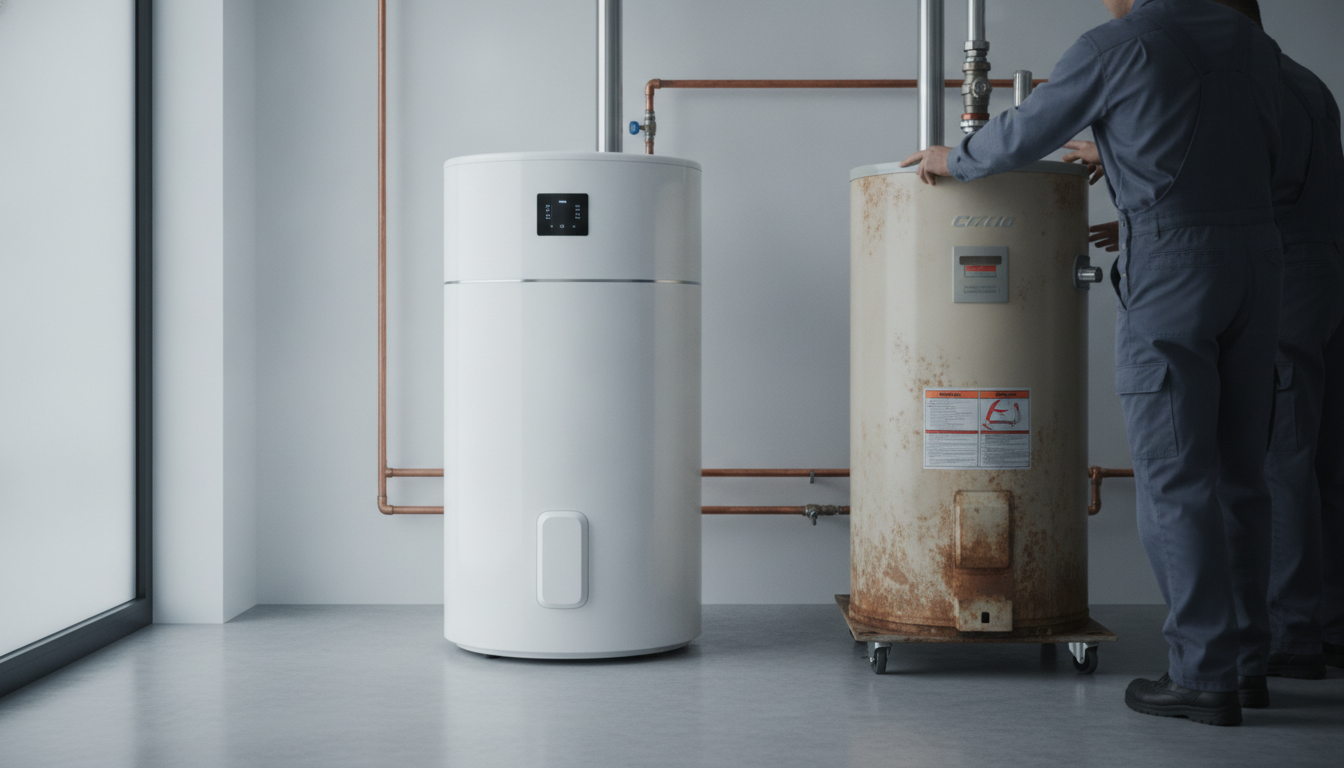
Determining whether your water heater is nearing the end of its functional life is a critical aspect of home maintenance that prevents catastrophic flooding and unexpected cold showers. Most homeowners realize it is time to replace a water heater when they notice visible tank corrosion, persistent leaking at the base, or a significant decline in hot water volume. Typically, a standard storage-tank water heater lasts between 8 and 12 years. If your unit has surpassed the decade mark and exhibits symptoms like rumbling noises (caused by sediment buildup) or rusty-colored water, proactive replacement is often more cost-effective than emergency repairs. At SunShine Plumbing Pros, we emphasize that modern high-efficiency units can reduce energy consumption by up to 20%, making the transition a financial investment rather than just an expense.
The Anatomy of a Failing Water Heater: Recognizing the Early Warning Signs
A water heater rarely fails without giving off subtle clues first. As a homeowner, understanding these signals requires a mix of sensory observation and technical awareness. The primary mechanism of failure in traditional tank-style heaters is internal corrosion. Because water is a universal solvent, it eventually eats through the steel tank despite protective measures like glass lining and sacrificial anode rods.
When we evaluate a system at SunShine Plumbing Pros, we look for “weeping” around the fittings. This is often the first sign that the internal pressure and thermal expansion have compromised the tank’s integrity. If you notice moisture around the top of the tank or a small puddle in the overflow pan, the clock is ticking. Ignoring these signs can lead to a “tank burst,” where the bottom of the unit drops out, releasing 40 to 80 gallons of water into your home instantly.
The Age Factor: Why the 10-Year Mark Matters
While some units can stretch to 15 years, the National Association of Home Builders notes that the average life expectancy is approximately 10 years. The age of your unit is often hidden within the serial number on the manufacturer’s sticker. Usually, the first two digits represent the year, or a letter code represents the month (A for January, B for February). If your water heater was manufactured before 2015, it likely does not meet the current NAECA (National Appliance Energy Conservation Act) standards, meaning you are paying significantly more in utility costs than necessary.
Physical Symptoms That Demand Immediate Attention
Beyond the age of the unit, physical changes in the water and the heater itself serve as definitive diagnostic tools. If you encounter any of the following, a professional assessment is no longer optional.
1. Rusty or Discolored Water
If you turn on the hot water tap and see a reddish or brown tint, but the cold water remains clear, the interior of your water heater tank is rusting. This corrosion will eventually lead to pinhole leaks. However, it is important to rule out your piping. If you have galvanized plumbing, the pipes themselves could be the culprit. A professional plumber from SunShine Plumbing Pros can perform a water quality test to determine if the rust is originating from the tank’s internal lining.
2. Unusual Noises: Popping, Rumbling, and Banging
As water heaters age, sediment buildup (calcium and magnesium scale) settles at the bottom of the tank. When the burner or heating element engages, it must heat this layer of “crust” before it can heat the water. This causes the water trapped beneath the sediment to boil and turn to steam, creating a popping or “kettling” sound. Not only is this noisy, but it also causes the metal tank to overheat and become brittle, significantly accelerating the risk of a crack.
3. The Presence of External Moisture or Leaks
Active leaking is the most obvious sign of failure. However, distinguish between condensation and a structural leak. Condensation often happens when a large amount of cold water enters a hot tank. A structural leak, however, usually stems from the tank expanding and contracting over thousands of heating cycles, eventually causing the metal to fatigue. If you see water pooling around the base, check the Temperature and Pressure (T&P) Relief Valve. If the valve is leaking, it might just need replacement; if the tank itself is damp, the unit is finished.
Performance Issues: When the Hot Water Runs Out Too Fast
Does your morning shower turn lukewarm halfway through? This is a classic sign of a failing component or a tank filled with sediment. In electric water heaters, this often points to a burnt-out lower heating element. Since the lower element does the bulk of the heavy lifting, its failure leaves you with only the top third of the tank being heated.
In gas units, a failing dip tube could be the problem. The dip tube is a plastic pipe that directs incoming cold water to the bottom of the tank. If it breaks or disintegrates, the cold water mixes with the hot water at the top of the tank, resulting in lukewarm water at your faucets. While a dip tube can be replaced, in an older unit, it is often a precursor to total system failure.
| Symptom | Potential Cause | Urgency Level |
|---|---|---|
| Popping/Rumbling | Sediment Buildup | Moderate (Flush Tank) |
| Rusty Water | Internal Tank Corrosion | High (Replacement Likely) |
| Lukewarm Water | Heating Element/Dip Tube Failure | Moderate (Repairable) |
| Water Around Base | Tank Fracture or T&P Valve | Critical (Immediate Action) |
| Metallic Taste | Anode Rod Depletion | Low (Replace Anode) |
The Role of the Sacrificial Anode Rod
Many homeowners are unaware that their water heater contains a “sacrificial” part designed to die so the tank can live. The anode rod is a magnesium or aluminum rod that hangs inside the tank. Through a process called electrolysis, the rod attracts corrosive elements in the water, causing the rod to corrode instead of the steel tank.
At SunShine Plumbing Pros, we recommend checking the anode rod every 2 to 3 years. Once the rod is completely dissolved, the water begins attacking the tank walls. If you haven’t replaced your anode rod in 5 years, the internal corrosion has likely already begun, and a full replacement of the heater is often the only safe path forward.
The Economic Decision: Repair vs. Replace
Deciding whether to sink money into a repair or invest in a new unit is a common dilemma. We suggest using the “50% Rule.” If the cost of the repair exceeds 50% of the cost of a new unit (including installation), and the unit is older than 8 years, replacement is the smarter financial move. Furthermore, consider the Energy Factor (EF). Modern units are significantly better insulated and use advanced combustion technologies that lower monthly gas or electric bills.
Hidden Costs of Keeping an Old Unit
- Efficiency Loss: Sediment acts as an insulator, requiring more energy to heat the same amount of water.
- Insurance Risks: Many homeowners’ insurance policies will not cover water damage caused by a water heater that is over 10 or 12 years old.
- Emergency Surcharges: Replacing a unit on a Tuesday morning is much cheaper than an emergency call on a Sunday night when the tank has flooded your basement.
Modern Alternatives: Is It Time to Go Tankless?
When it comes time for replacement, you are no longer restricted to the same type of unit you currently have. Tankless water heaters (On-Demand systems) have become the gold standard for many homeowners. These units heat water as it flows through a heat exchanger, providing an endless supply of hot water.
Pros of Tankless Systems:
- Longevity: They typically last 20+ years, double that of a tank system.
- Space Savings: They are wall-mounted and take up a fraction of the footprint.
- Efficiency: No “standby heat loss” because there is no tank of water being kept hot 24/7.
Pros of High-Efficiency Tank Systems:
- Lower Initial Cost: Significant savings on the upfront purchase and installation.
- Simpler Installation: Usually does not require upgrading gas lines or venting.
- Performance: Modern “Heat Pump” water heaters are incredibly efficient for electric-only homes.
Environmental and Local Factors Impacting Your Water Heater
In regions with hard water, water heaters face a much tougher battle. High concentrations of calcium and magnesium lead to rapid scale accumulation. If you live in an area with particularly hard water, you might find that your water heater only lasts 6 to 7 years unless you have a whole-home water softener installed.
SunShine Plumbing Pros experts often see units fail prematurely in local areas with high mineral content. We recommend annual flushing of the tank to remove these minerals. If you haven’t flushed your tank in years, doing so now might actually cause a leak, as the sediment might be the only thing plugging small corrosion holes in the tank wall.
“A water heater is the only appliance in your home that can cause thousands of dollars in structural damage in a matter of minutes. Being proactive isn’t just about hot water; it’s about home security.” — Lead Technician, SunShine Plumbing Pros
Safety Concerns: The T&P Valve and Carbon Monoxide
Safety is the most critical reason to monitor your water heater. Gas-fired units require proper venting to exhaust carbon monoxide (CO) out of the home. Over time, vent pipes can become dislodged or corroded. If you notice a “burnt” smell or soot around the top of the heater (backdrafting), turn off the gas immediately and call a professional.
Similarly, the Temperature and Pressure (T&P) Relief Valve is a safety device designed to open if the internal pressure or temperature exceeds safe limits. If this valve is stuck shut due to mineral buildup and the thermostat fails, the water heater can literally become a pressurized rocket. Testing this valve annually is a vital safety check.
The Replacement Process: What to Expect
When you decide it is time to replace, the process involves more than just swapping tanks. Modern building codes often require upgrades that weren’t in place when your old unit was installed. These may include:
- Expansion Tanks: Required in “closed” plumbing systems to handle the pressure of heated water.
- Drip Pans and Drains: To catch and divert minor leaks.
- Earthquake Straps: In seismic zones, these prevent the unit from tipping over.
- Upgraded Venting: High-efficiency gas units often require PVC venting instead of old metal flues.
Working with a licensed professional like SunShine Plumbing Pros ensures that all local codes are met and that your manufacturer’s warranty is fully protected. DIY installations often void warranties and can lead to insurance claim denials if a leak occurs.
Frequently Asked Questions Regarding Water Heater Replacement
How much does a new water heater cost?
The cost varies wildly based on the type (gas, electric, tankless) and the capacity. On average, a standard tank replacement costs between $1,200 and $2,500 including labor. Tankless conversions can range from $3,500 to $6,000 depending on the necessary gas line and venting upgrades.
Can I just replace the heating element instead of the whole tank?
Yes, if the tank is less than 8 years old and there is no sign of rust or leaking. Replacing elements or thermostats is a routine repair. However, if the tank itself is corroded, replacing the element is a waste of money.
Why is my water heater making a high-pitched whistling sound?
This is often caused by high incoming water pressure or a restricted valve. It can also be “kettling” from sediment. It’s a sign that the internal pressure is fluctuating, which stresses the tank seams.
Is a heat pump water heater worth it?
For homeowners in warmer climates or those with electric-only utilities, heat pump water heaters (hybrid units) are incredibly efficient. They pull heat from the surrounding air to warm the water. They can pay for themselves in energy savings within 3 to 5 years.
Final Checklist: Is It Time?
Before you make the call, run through this final checklist to confirm your decision:
- Age: Is it older than 10 years?
- Water Color: Is there a brown/red tint in the hot water?
- Noise: Do you hear banging or popping when it’s running?
- Leaks: Is there standing water or dampness around the base?
- Repairs: Have you had to call a plumber more than twice in the last year?
If you answered “yes” to two or more of these questions, the transition to a new system is inevitable. Choosing to replace it now on your own terms allows you to research the best models, find the most energy-efficient options, and schedule the work at your convenience.
Trust the Experts for Your Water Heater Transition
At SunShine Plumbing Pros, we specialize in helping homeowners navigate the complexities of water heating technology. Whether you are looking for a traditional high-recovery tank or an ultra-modern tankless solution, our team provides the expertise needed to ensure your home remains safe, efficient, and—most importantly—supplied with all the hot water you need. Don’t wait for a flood to tell you it’s time for an upgrade. Contact us today for a comprehensive system evaluation and peace of mind.
Conclusion: Proactive Maintenance Saves Money
In summary, your water heater is a workhorse that operates under constant pressure and heat. Understanding the signs of aging—from the depletion of the anode rod to the accumulation of sediment—is the key to avoiding property damage. By monitoring the age, performance, and physical condition of your unit, you can make an informed decision that balances upfront costs with long-term energy savings. Remember, a new water heater isn’t just a purchase; it’s an investment in your home’s infrastructure and your daily comfort.